Back 4 Blood (2021)
WARNING: Because B4B was blast to light and even more fun to virtually photograph, there are give or take ~100 images in this album. Make some coffee, relax, and enjoy a leisurely scroll!
Lighting wise, Back 4 Blood was an exercise in representing a fallen Americana world in an unloaded and natural way.
I collaborated with Scott Knapp on some of the locations (34 in total) though for most of our work we owned whole sections from start to finish of the lighting and look development process.
With a beefy render farm, an awesome build team and some strategic coffee breaks, we used Unreal Engine 4's baked global illumination for all lighting. Each project-wide production bake took about 60 hours from start to finish, though during development we used the medium bake quality to preview things and iterate quickly.
They're not on ArtStation, but Richard Shemaka, Kevin Bray, and Ryan Adams gave B4B best-in-class HDR output. The game truly and literally shines on a nice OLED TV in HDR since they wrote their own approach to improve on the stock HDR techniques of the engine.
For display on ArtStation, I did minor adjustments to the raw screenshots to expand the dynamic range and make them feel more photographic in terms of exposure and highlight behavior. Most shots were taken with focal lengths between 18mm to 35mm.
The high-ISO sensor noise of my Panasonic S1 was sampled to composite on the shots to break them up and add texture. Lens flares from my own Zeiss Milvus lenses have been composited to enhance select shots where a particularly bright light source is shining right into the virtual camera.
Check out the other fine people who worked on Back 4 Blood!
Art Direction:
https://www.artstation.com/mikebrainard
Lighting and look development:
https://www.artstation.com/scottknapp
Environment, level art, & design:
https://www.artstation.com/ianrunnels
https://www.artstation.com/evansart
https://www.artstation.com/tivoli
https://www.artstation.com/pipesfranco
https://www.artstation.com/brentgriffith
https://www.artstation.com/jafo
https://www.artstation.com/zinged
https://www.artstation.com/dallanpickard
https://www.artstation.com/alternateground
https://www.artstation.com/phillgonzales
https://www.artstation.com/juanderbread
https://www.artstation.com/zenmatto
https://www.artstation.com/joshjones
Character art:
https://www.artstation.com/alexboatman
https://www.artstation.com/jchavez21
https://www.artstation.com/elliotb
https://www.artstation.com/jhill
Weapon art:
https://www.artstation.com/bradboyles
Concept art:
https://www.artstation.com/jonnadon
https://www.artstation.com/michaelshinde
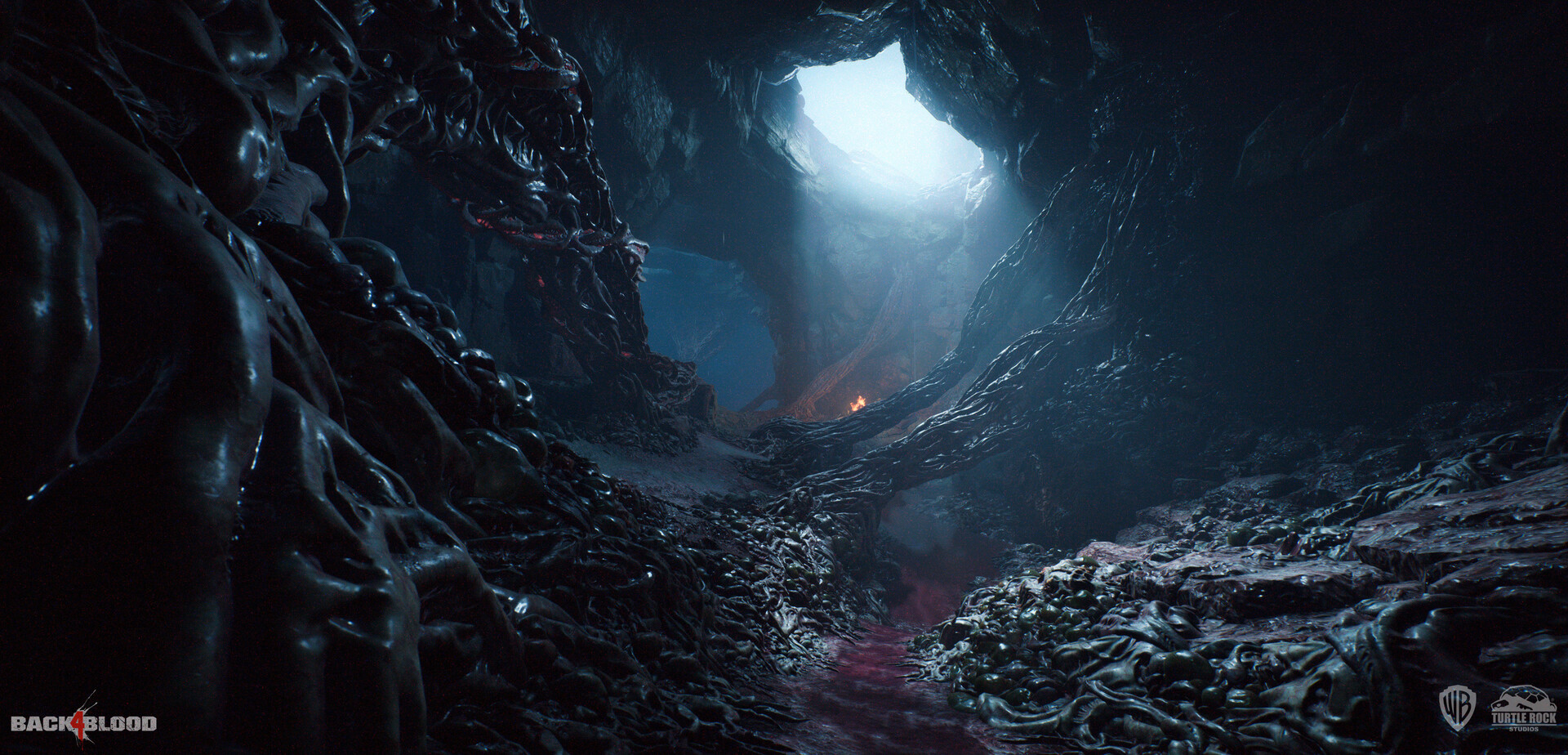
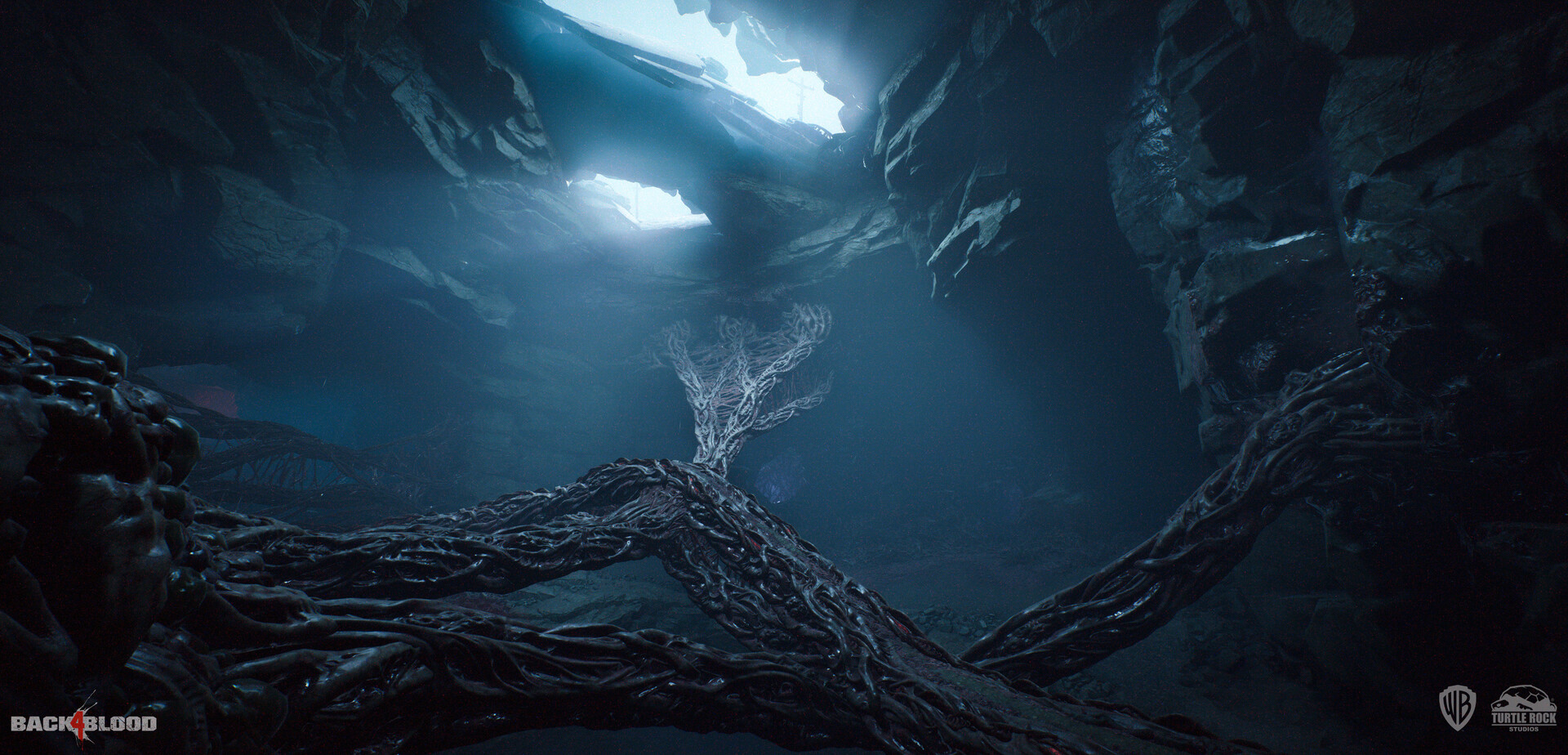
St. Peter's Basilica is the inspiration for the structure of lighting in The Abomination tunnels. It felt appropriate that this massive underground space would feel more like a deathly cathedral than a cave.


To create large enough reflections for the materials to look wet and nasty, large area lights were used below the ceiling rifts to boost the reflection environment. Not unlike how you would "light" a black car by giving it something to reflect.



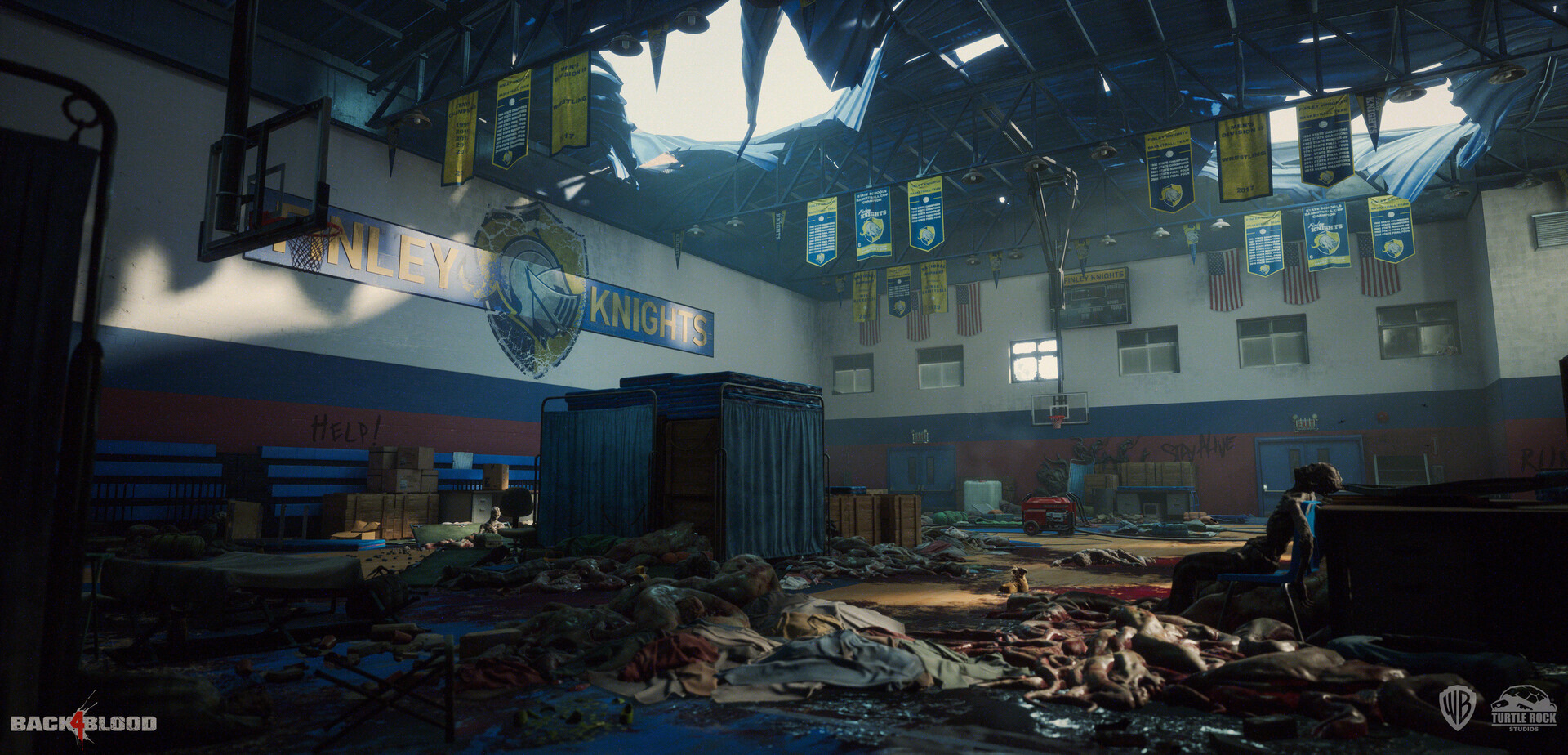
At the end of the project, the lighting for the school interior environment was re-authored to achieve a more photographic balance between the interior and exterior exposure. We wanted the outside view to be overexposed when inside.



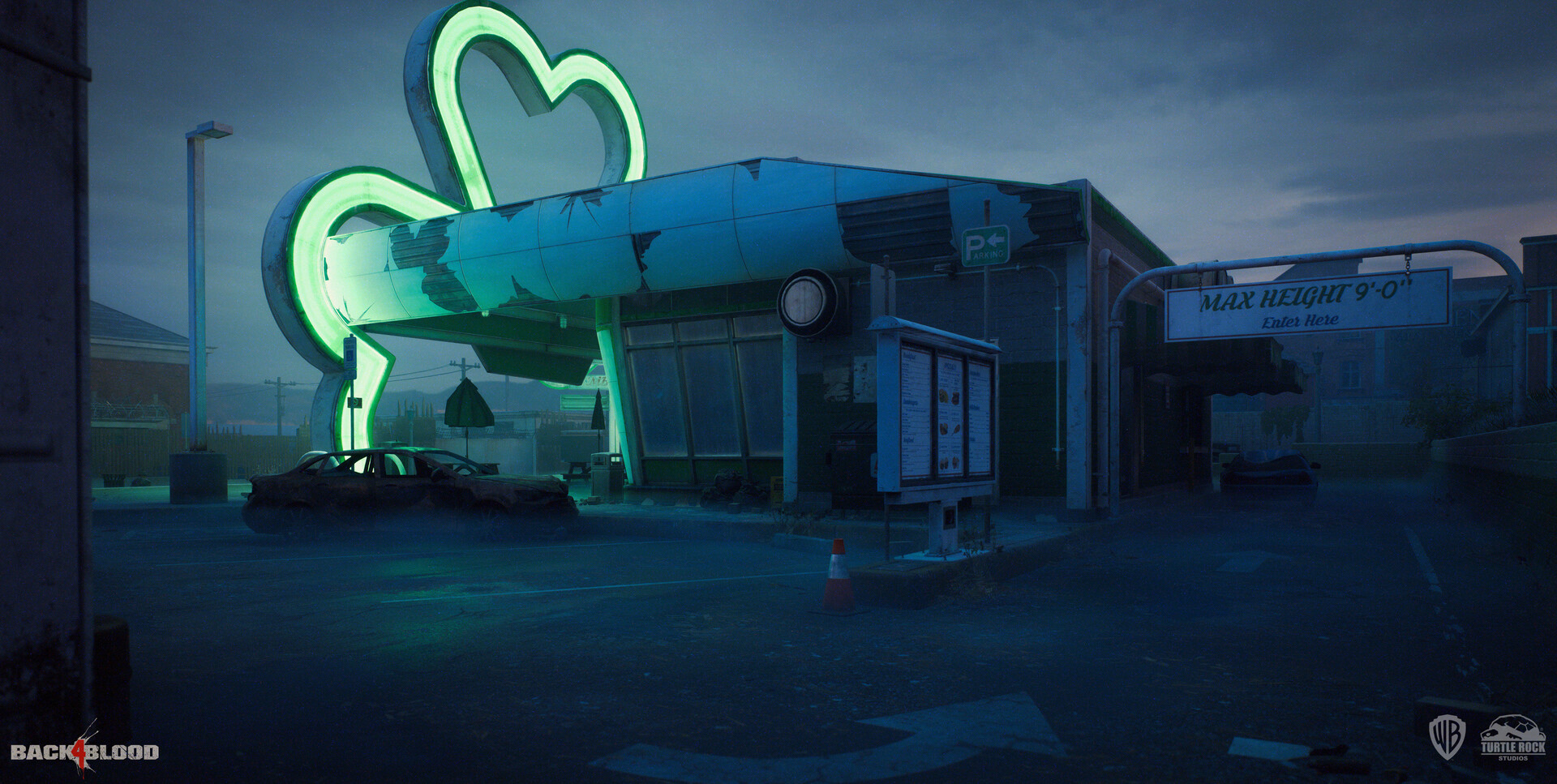
When setting up the calibration scene for balancing HDR, Ian Runnels and I decided to create an homage to one of our favorite movies: No Country For Old Men.


The record store interior is a personal favorite because of how the warm string lights amplify the red bounce off the walls.


The CDC tent interiors were the first things I lit on the project and the bulk of it was done with large emissive cards tinted the same as the tent material to create super diffuse lighting and reflections.


A day-for-night technique was used to create this sky. A daytime HDRI was modified by replacing the sun ball with moon art and all of the blue was made black. The fog in the engine filled things in to give it a softer, naturalistic look.


The lighting for Keet's bar was inspired by a pub in Atlanta called Mac Mcgee, along with a few others in Decatur.


In general I tend to like images that have fewer light sources since I prefer that the natural bounce behavior fills in the rest of the location.




The lighting setup for the Dark Card mechanic shares the same global fog, skybox, post processing and exposure settings across the game to create a consistent look and feel when this mode is active.

Flares captured using my own Zeiss Milvus lenses and composited onto the screenshot. In this case, a Zeiss Milvus 50mm at F8 to get a nice aperture burst where the game flashlight is.