Maneater - Lighting and look development (2020)
(These shots had a treatment in Davinci Resolve to enhance the game's look to be more similar to my own photography.)
For Maneater, I was the sole look development lighting artist for the game after Tripwire received the project from Blindside Interactive. We started from the ground up in Unreal Engine 4 with lighting, post, and materials to dial in a unique identity that would give the project a lighthearted visual appeal.
The goal was to avoid total photorealism in the feel of the world and characters because of the gory nature of how the game plays.
Supporting the dynamic time of day system with a focus on performance, a directional light (for the sun and moon) + a sequence of real-world HDR probes (skylight) which span sunrise to sunset are interpolated over the course of a day cycle to provide ambient lighting and reflections for the world above water. An underwater HDR (taken in a coral reef) provides ambient lighting when underwater.
Leland Scali created the foundation of the ToD system with additional engineering work by Brooks Butler, Blake Edwards, and Dan Weiss. Michael Kissinger created blueprint tools for me to use to propagate thousands of light actors across the game world quickly because of its sheer scale. It wouldn't have been possible to light it without them!
The water surface acts as a blend region that automatically interpolates between underwater lighting and world lighting. Different exposure values, color grading, and volume fog attributes define the look of underwater and above water.
Volume fog is used extensively and is key to the look of the game in order to get a believable sense of light scattering through the water column.
GameOn did motion capture and scene assembly + camera composition for the in-engine cinematics and were awesome to collaborate with! Working on the cinematic lighting sequences was my favorite part of the project.
On the character art front, Bryan Wynia, Samantha Rogers, Andrew Quintiliani, and Keos Masons outsourcing kicked all of the ass.
https://www.artstation.com/bryanwynia
https://www.artstation.com/samrog
https://www.artstation.com/broodovermind
https://www.artstation.com/keos-masons
Environment team led by:
https://www.artstation.com/andrewkerschner
Maneater was one of the most fun (and colorful!) projects I've been lucky to be a part of :)

Volume fog lighting + red subtraction + diffuse bloom were key to getting the underwater look to feel believable. This is the area seen in the beginning of the game.

Lighting the world was a joy thanks to the foundation that Andrew Kerschner, Joe Dionisio, Tim Lewis, and Aaron Ault built.

Lighting the complex sewer network was made possible thanks to Michael Kissinger's procedural light placement tool built into the sewer generation system. I could edit the parent lights and every sewer would adjust automatically.

To maintain gameplay readability, night time lighting was done using a day-for-night approach.

Waterproof street lamps.
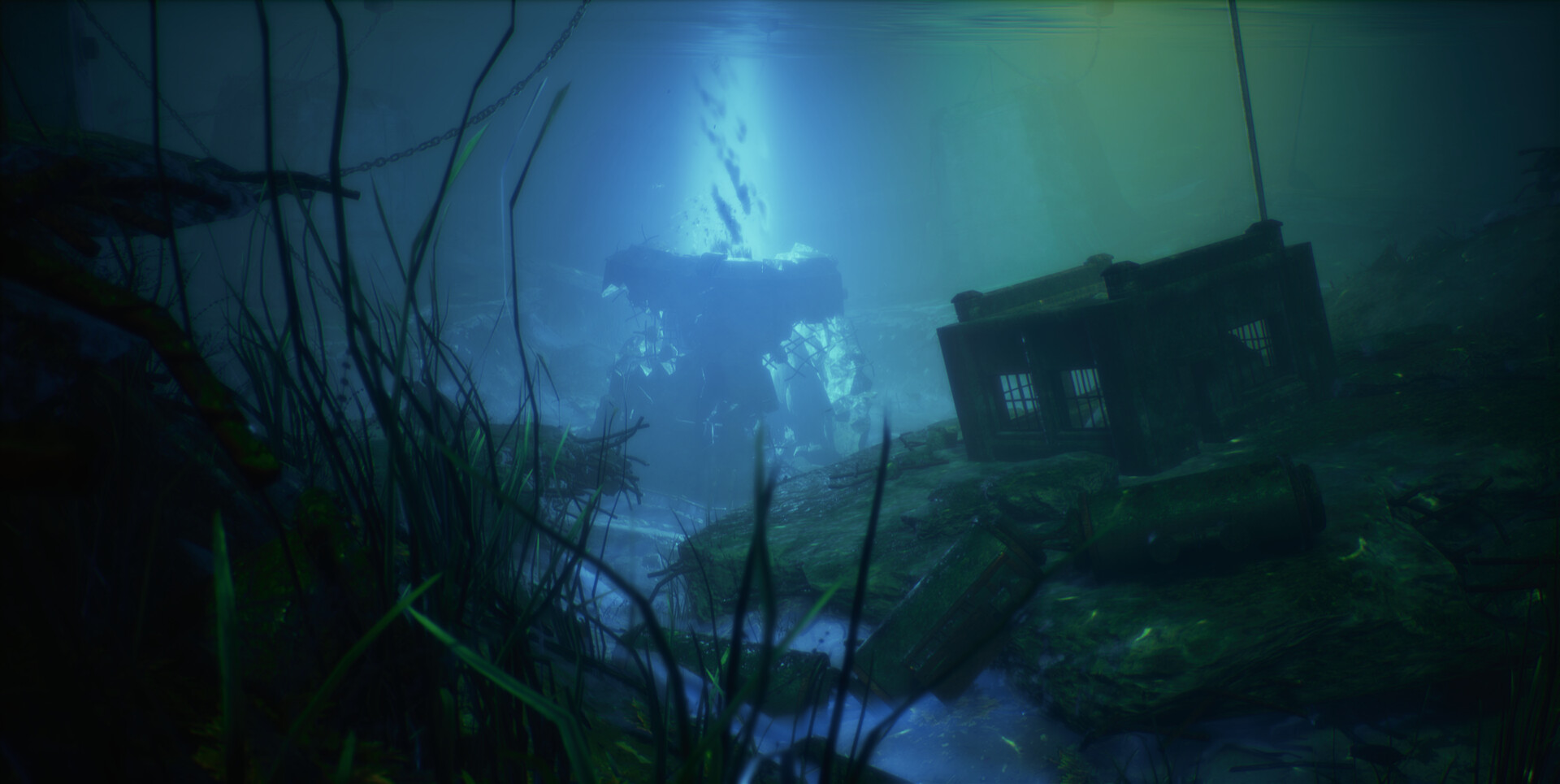
The nuke area went through a few lighting iterations until I saw the Chernobyl series on HBO. The show inspired the idea to play up the blue glow of Cherenkov radiation in the water around the broken container.


The mafia dump site. The bodies are ragdoll objects that scream when you bite them.


Morning time over the Prologue region.

Fog density and post processing tint were determined by the region water type. Fawtick Bayou is amber with dense fog to convey the look of a muddy freshwater lake. All tinting was subtractive, so blue and green were removed until we arrived here ^.


It's nice when a ToD system works after dialing everything in :)


To save on performance, the sunlight was keyframed to key positions for the cinematics to take advantage of its higher resolution shadow and brightness. The goal was to use as few lights as possible for cinematics.


While an extra wrap light from Kyle's right would have felt "prettier", I tried to play up the Discovery Channel / reality show aspect of the Maneater TV series in the game to keep the lighting simple and as un-Hollywood as possible for the cinematics.


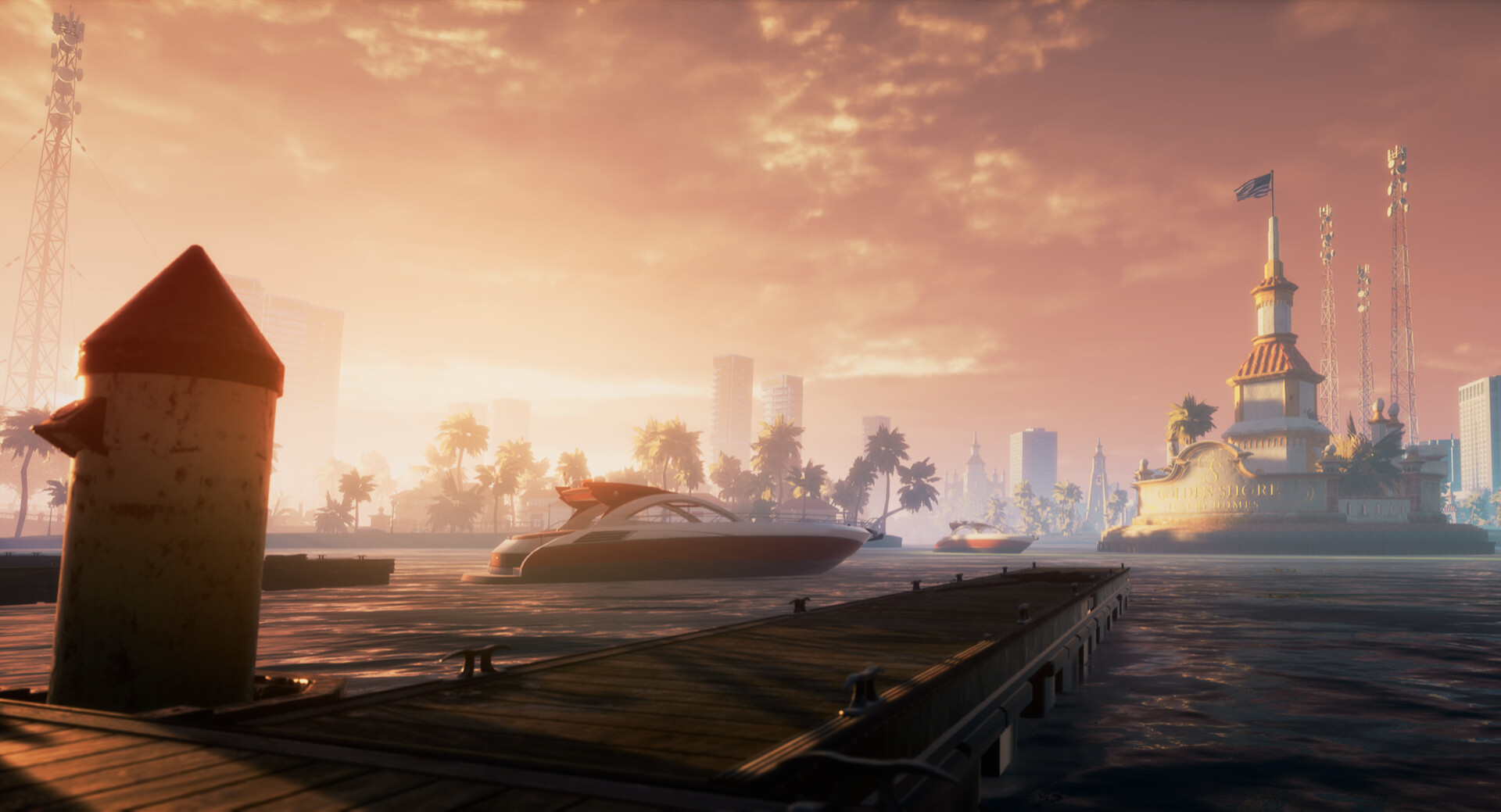


The VFX team did such an awesome job on the game FX and cinematic FX alike.


Pete wondering if you wanna know how he got those scars.

This confrontation cinematic with Pete was a fun exercise in animating the on-camera light's intensity to help exaggerate the depth of Pete's movement on the dock relative to the "camera crew".
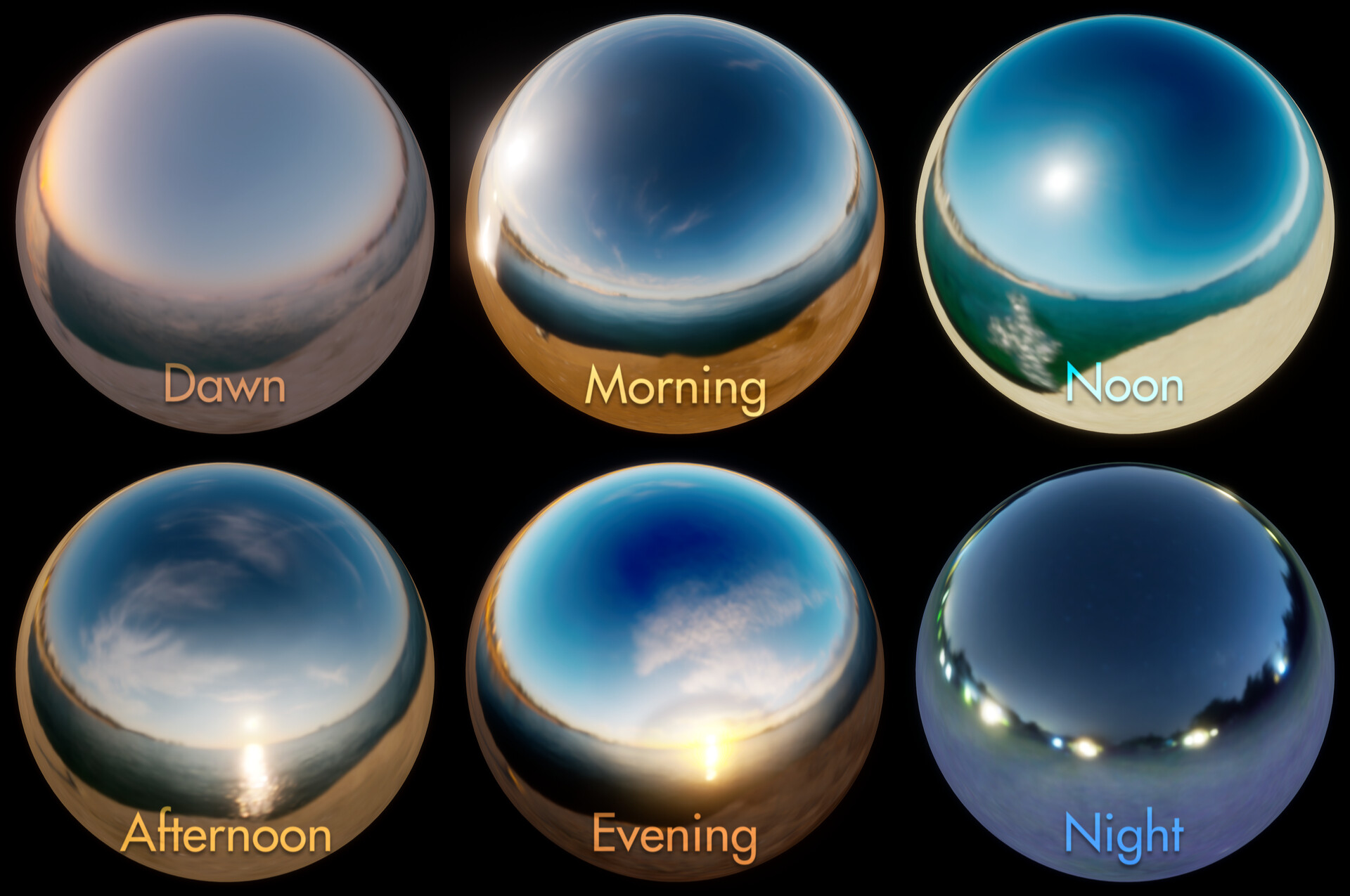
The ambient world lighting above water was driven by a sequence of time-interpolated HDR cube maps on the skylight (implemented by Blake Edwards) to avoid performance hitching from periodically resampling the skylight actor.